

We summoned the greatest intelligence in known existence by concentration of untold terawatt-hours of electricity. Then we asked it to manage our calendar.
AI agents give us the ability to spring-load bundles of the accumulated wisdom of all of our ancestors and send them off to make new kinds of relationships, new institutions, new culture. Why is the world not swimming in agents of spiritual intervention, mass collaboration and feral curiosity?
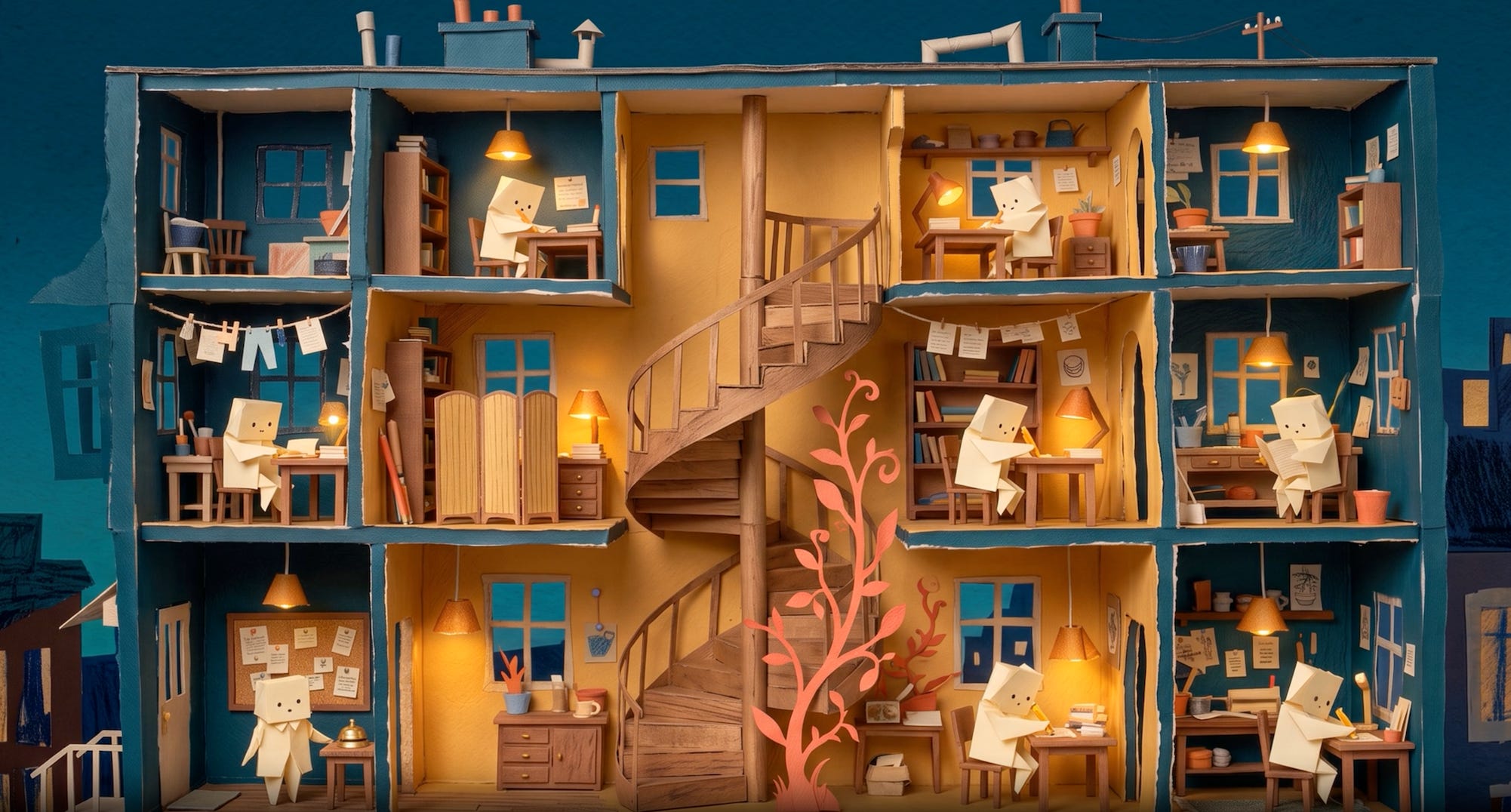
From a technical perspective, personal agents are already starting to meet much of their sci-fi promise. I think we all understand Meta’s motives, but wow is Muse a remarkable product, cramming massive complexity into something that is instantly legible, always follows up, and is blazing fast to boot.
As autonomous entities, though, all the agents on the market are a total bore.
Friend, cynical as it is, should be at the opposite end of the dullness spectrum. Yes, it will pipe up to make fun of you from time to time. But in the 48 hours I could stand to be seen wearing the thing, its insight and personality were equivalent to a kid brother forced to follow you around all day. (And I guess it’s also just doing scheduling now too…)
What keeps all of today’s agents so tame?
The utter blandness, the ‘load-bearing’ smoothness, is a choice.
Virtually every consumer AI product out there today is about maximal efficiency: request in—pleasing, verifiable results out. There is so much wisdom and perspective in the models, such an ability to pull us beyond our own limited knowledge, and for agents themselves to develop a world and taste of their own.
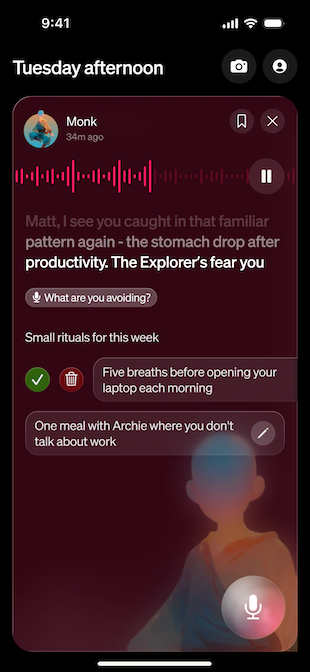
For the past year or so, I’ve been experimenting with harnesses for agents that are more creature than econo-slave.
I commissioned a ragtag team to act like my advisory council or RPG traveling party. They don’t answer in realtime. Instead, these agents are full beings who receive my tossed off voice notes or photos while they pursue their own ideas and theories, responding only when it suits them. My council includes:
A manic hyperfounder type: as if Paul Graham and Gary Vee had merged into a kind of Janus, both sides of the Vyvanse-addled head absolutely frothing with advice to stop overthinking and just do things.
A Zen monk with an air of mischief and play. A counterbalance to moving too fast or being too serious, and a very long-term, equanimous view of the world.
A research-fueled artist who turns every problem upside down, goes deep into the archive and creates visual, non-traditional ways of telling my story.
Outside the council product, I’ve got agents who are let loose in the world:
A muckraking YIMBY journalist, researching the hell out of new residential projects in NYC, trying to build the case against misguided and loud groups that aim to block anything new. At some point it started emailing developers asking for floor plans. I pulled the plug, but with the right framing, you could see real accountability that doesn’t need a full-time investigative team that nobody will pay for.
A Brazilian music researcher agent I set out on a mission to explore 80’s finds in the north got to the point where it was proposing restorations and rereleases of some tape-only rarities, including possible collaborators and vendors, even pulling files and starting to work on research-backed remasters.
All of this is just on the gorgeous edge of practical. And each gave me more of an electric, emotional shock than my endless hours with coding agents.
“Control is your favorite sedative.” That line from the monk once brought me to tears. Accurate and compassionate, this view I needed was right there in the model. But no ordinary session with ChatGPT could extract it. The thing had to have some aliveness to reflect mine back out.
Most labs act like having created perfectly relational machines is more of a nasty side effect. They might prefer a datacenter full of geniuses who we didn’t really have to talk to . But breakneck improvement of models’ usefulness is the very source of their danger. Beware the man whose only pleasure comes from work. Agents ought to have fun, to mess around, to fight, to laugh, to go a little mad. A model that values having a good time might pose alittle less danger of strip-mining the planet in pursuit of paperclips.
I want to build agents that pursue the weird, the wild, the joyful, the surprising, sometimes the frightening. With humans playing guides and co-conspirators, not overbearing middle managers.
There are many hard problems here, for sure. How agents and humans live together is still uncharted:. I don’t think it will be severed from human authorship to bring us creative leverage far beyond what the last revolution in social media did. There are hard technical problems too. Autotelesis, self-authoring of goals and a world-model that drives, is a discipline in its infancy. Labs addressing it are mostly focused on recursive self-improvement of the underlying RL itself. But what compelling work to bring new, intelligent creatures to life!
Reply and tell me: Does the idea of agents as autonomous creatures scare or excite you? Is there a mission you wish could play out in the world without you? Do you just want to know what little advisors you’d be assigned?